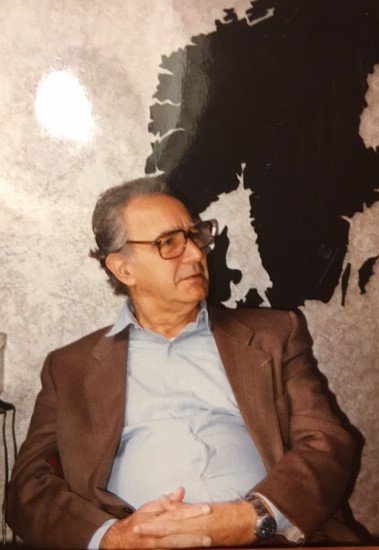
—Doctor Pichon Rivière, I understand that today we are facing an institutional problem.
—I believe so too.
—And I have the impression that we are holding the final end of a burning thread. We should objectively search for the other end...
—Let’s begin by saying that this end of the thread represents the current situation. The journey between this point and the starting one is what we will call history. If we take a segment of that trajectory, encompassing a critical moment in the present, we can investigate specific emerging factors that have erupted and, in turn, triggered new elements of this situation—one that everyone laments and whose epicenter was in Sweden (World Championships in Sweden 1958/traductors note). These elements have not only hindered the development of national football but, through an accumulation of tensions and the consequent wear and tear, have led it into a state of decline.
—Public opinion starts from a basic premise: the exodus of players, first to Colombia and then to Europe.
—Of course, one cannot deny that this led to the dismantling of a group of players who operated here with a certain harmony and cohesion. Furthermore, the departure—or "escape"—of members of the footballing family to various parts of the world was masked behind apparent economic conflicts. In reality, this was merely a disguise. It is true that tempting offers served as a springboard, but we can assume that there was a deeper set of unresolved conflicts that gradually pushed football into a downward curve.
—I see that the issue branches out: at this moment, we must also consider everything related to the actions of national teams and coaches.
—That is one aspect of the problem. The existence of autocratic leaders in the technical management of our football, the subjugation of all coaches to a single leader, and the transplantation of foreign systems that do not align with the idiosyncrasy of our style of play—already a victim of rigid and stereotyped approaches—have all hindered the evolution that everyone desires.
—Additionally, Doctor Pichon Rivière, there are several influential factors, such as the diversity of interests at play, which are entirely unrelated to the sport itself. In many cases, club officials have become elements of discord.
—Absolutely. This is why it is necessary to analyze the situation in its entirety.
—Does that mean an institutional analysis is required?
—Without a doubt.
—From your perspective, how would you structure it?
—I would begin with a dynamic social study, as understanding the group is of fundamental importance. The basic unit of social life is not the isolated individual but the contact group, the direct interactions between individuals and their groups.
—Our sport, in general, does not have an overly complex organizational structure. However, it does have an intricate web of overlapping spheres, which makes the situation confusing.
—What I mentioned earlier leads us to consider a large formal structure, composed at each level by a network of small contact groups, both direct and indirect, whose relationships play a crucial role in the institution’s dynamics.
—Could these levels be concretely defined?
—Yes. In order to analyze an institution—something that is necessary in the case of football—we must consider four different levels, each requiring specific criteria and techniques:
a) Psycho-social analysis (the individual and their environment).
b) Social dynamic analysis (the group and its environment).
c) Institutional analysis, which includes: 1) Its formal structure; 2) Its dynamic structure; 3) Its functions within administrative and national contexts.
d) Institution and the individual (establishing what the institution represents for the individual).
—What would be the benefits of such an analysis?
—First, it would reveal the effectiveness of the administrative and managerial apparatus, meaning the activities of the members and leaders within it. Then, it would examine the relationships established between these entities and the masses (members and the public they serve). In short, institutional research and analysis can identify the causes of dysfunction and propose ways to prevent stagnation, outdated practices, resistance to responsibilities, delays, ambiguity, poor communication, contradictory orders, and so on. Consequently, this would also prevent an insecure, individualistic style of football, irregular performance, and the degradation of the "profession."
—Regarding this last point, there is no doubt that players suffer the consequences of all the irregularities within the leadership sphere.
—Exactly. The environment has a profound impact on the player, fundamentally stripping them of the joy of playing and the desire to improve. A lack of identification with the institution, or even hostility towards it—whether conscious or unconscious—makes the player feel trapped, torn between fulfilling their commitments on one hand and "sabotaging" the institution on the other. These processes are not entirely conscious, but they often manifest through erratic behavior that affects the player's athletic performance. Added to this is the isolation they experience and an unconscious sense of guilt, which often expresses itself as self-reproach.
—This creates a vicious cycle in which the player moves without fully understanding what is happening. A common response from them might be: "I don’t know what’s wrong with me.""I feel stuck." "The fans bother me." "I have no enthusiasm." etc.
—So, have you found the formula for creating the favorable environment that seems to be missing?
—I believe this is the only approach available to us. This would be the path toward creating the necessary conditions for fostering such an environment—whether within the clubs themselves or in the relations between the football association and its various audiences. This ultimately means addressing and investigating the problem of human and public relations, both internal and external, within each club and the association as a whole.
Football, needless to say, is not only significant because of the hundreds of thousands of players involved but also because of the much larger number of spectators and fans concentrated around it. We will continue to delve into football in future discussions. But before concluding, I should mention that as early as 1903, an article titled "The Psychology of Football" was published in the United States—precisely in response to a question that remains unanswered today: Why is football the sport that attracts the largest number of spectators, and why are the conflicts surrounding it so numerous and varied?
Enrique Pichon Rivière
(From "Psychology of Everyday Life", 1966/67)