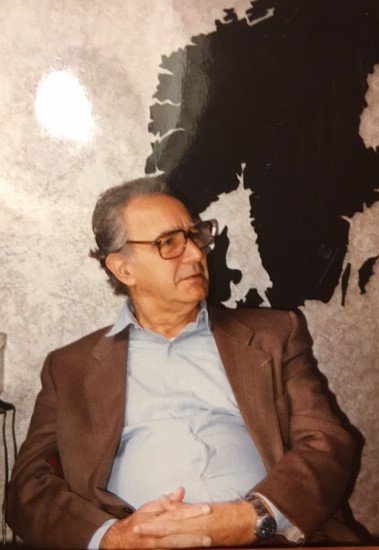
Enrique Pichon-Rivière: Psychiatry in the context of medical studies

Contribution to the subtopic "The Teaching of Medical Psychology"
(a collaborative work with Dr. Horacio Etchegoyen)

We have been unable to locate where this work was originally presented.

The defining characteristic, perhaps, of modern medicine is its rediscovery of humanity. To encompass the human being in their highest and most complex unity is the great challenge today, as it is no longer possible to study humans as a mere sum of their parts but rather as a living, functional whole.

The 19th century allowed for an understanding of humans as biological beings adapted to their environment. Through the methods of natural sciences, it examined the organism deeply, rationally, and objectively, achieving a knowledge of unimpeachable solidity. However, this knowledge was partial and fragmented. It was partial in that it neglected the undeniable fact that the human environment is not only physical but also social. It was fragmented because it studied the human being in death and in isolated parts. To continue interpreting humans as biological beings adapted to their environment, it has been necessary to recognize their highest level of functioning—the psychic—and to apprehend them in their integral and indivisible biological, psychological, and social quality.

This new socio-medical anthropology has largely emerged from psychiatry, which makes it possible to resolve the antinomy between disease and patient, to assess the importance of psychological and social components in behavior, health, and illness, and to grasp the effective factors influencing the doctor-patient relationship. This explains the mission of psychiatry in the context of medical studies: to provide the foundations for a more comprehensive vision of humanity. Achieving these objectives inevitably requires a new and enhanced approach to psychiatric education.

The Teaching of Medicine and the Role of Psychiatry

It is well known that medical education suffers from excessive breadth, and there is no justification for further expanding it. Therefore, the issue is not simply to advocate for more psychiatric instruction but rather to determine how psychiatry can best serve medical training. This can only be achieved if a new balance in the curriculum grants psychiatry the place it deserves.

It is essential for new knowledge to be incorporated into education from the outset to prevent students from acquiring a partial understanding of human nature. It is also advisable for this responsibility to fall under the psychiatry department, ensuring that this fundamental aspect of medical education is overseen by a single discipline. Leaving it to the discretion of other departments would not be ideal for numerous and obvious reasons, although collaboration between disciplines should, of course, be encouraged.

Consequently, psychiatry, as a fundamental subject, should stand alongside physiology, anatomy, and histology, contributing to the student’s preparation from the early years of their education.

Incorporating these areas of knowledge is tantamount to creating a new subject, whether it be medical psychology or preclinical psychiatry. The latter designation has the advantage of establishing continuity with clinical psychiatry, which is highly significant; however, it complicates the operation of the psychiatry department, as it requires a broader scope of work for which it is often unprepared.

The dilemma between medical psychology and preclinical psychiatry can be resolved in either of the two proposed ways: by creating a separate department for medical psychology or by expanding the scope of psychiatry. Either approach would need to ensure the unity of the teaching process and align it with the general medical education curriculum.

Content of Psychiatric Education

Although there is general agreement that psychiatry should be taught throughout the entire medical program, opinions diverge regarding its curriculum, as it is challenging to define general concepts that satisfy all schools. However, perhaps it is unnecessary to aim for such universal agreement. It may be more prudent to respect the individuality of instructors, trusting in their sound judgment, which deserves legitimate confidence.

The Parallel Operation of Psychiatry Departments and Curricular Structure

The establishment of multiple parallel psychiatry departments within each medical faculty should be encouraged, as is the case, for example, in Chile. This system would allow students the freedom to enroll in the department that aligns with their preferences. In this way, each department would guide a specific group of students throughout their entire education, following a vertical rather than a horizontal structure to ensure the continuity of the teaching process.

If these departments were staffed by representatives of the major psychiatric schools—which indeed exist in the country—each school of thought would have the opportunity to develop and implement its teaching plans, allowing for a comparison of methods. Such an approach would also ensure that future psychiatrists are exposed to all major schools, an essential step in preventing sectarianism, as Whitehorn emphasized.

However, for students, such a broad and complex teaching framework risks overwhelming them with an excessive array of information, potentially detracting from its educational value.

Psychiatric Education: A Model for the Curriculum

The 1951 Ithaca Conference, "Psychiatry on Medical Education," proposed general guidelines for the psychiatric curriculum over the four years of medical education in the United States. During the first two years of preclinical psychiatry, the primary topics include psychodynamics (the structure of the psychic apparatus and personality development), psychopathology, and interpersonal relationships. In the final two years of clinical psychiatry, students study patients in outpatient and inpatient psychiatric hospital settings (preferably in the psychiatric ward of a general hospital), child psychiatry, psychosomatic conditions, and more.

On this foundation, the American Psychiatric Association has developed a psychiatric program that spans the entirety of medical education. While broad and flexible, this program has the drawback of imposing a progression from normal psychology to pathology and then to clinical psychiatry. This approach gives students the false impression of divisions that do not truly exist within the continuous flow of human life.

A Unified Approach to Psychiatric Education

The curriculum outlined here seeks to ensure the unity of the teaching process and avoid any fragmentation. The core principle is that the approach to the patient should be comprehensive and holistic from the very beginning.

The progression of knowledge should be established through an increasingly profound understanding of the patient, rather than through separate subjects or topics. This approach ensures that the teaching mirrors the interconnected nature of human health, behavior, and pathology, fostering a cohesive learning experience.

The Early Steps of Psychiatric Education

In the initial stages of their education, students engage with the patient’s situation in the context of their illness, observing how the illness affects the patient’s behavior and social group. This approach allows students to transition gradually, naturally, and often rapidly from common understanding to scientific comprehension. This type of patient-centered engagement should ideally be introduced in the first year, enabling students to connect with living patients rather than focusing solely on cadavers. Lewin, in a now-classic article, pointed out the significant distortion this creates in the future relationship between the doctor and the patient.

This preliminary study of the patient’s surface conditions and social environment is conducted both in the hospital and at the patient’s home. Through home visits, where the student acts as a social worker, they gain insight into the problems faced by the patient and their environment, assessing the impact of the illness on both.

Progression Through the Years

  • Second Year: Students adopt the role of observer-participant, studying the patient’s personality and psychic structure. This stage introduces students to clinical psychology.

  • Third Year: Continuing as observer-participants, students delve deeper into the emotional and social implications of the illness, now examining these factors within the patient rather than intermittently as in previous stages. This phase connects them with psychopathology, psychosomatic correlations, and related fields.

  • Fourth Year and Beyond: Students transition into operational agents in their interactions with patients, whether in individual or group settings. They develop a sense of teamwork and study patients from diverse phenomenological and diagnostic perspectives. This stage involves applying all therapeutic possibilities and requires exposure to a broad range of patients, including outpatients and inpatients, individuals with neuroses and psychoses, organic and functional conditions, children and adults, and patients from different social classes and cultural backgrounds.

Pedagogical Challenges in Psychiatric Education

Psychiatrists with a dynamic orientation agree that one of the greatest challenges in teaching psychiatry lies in the strong emotional resistance it evokes. The subject matter and concepts provoke anxiety, leading students to reject the material because it activates neurotic elements of their personalities. Thus, the primary obstacle in teaching psychiatry stems from the very nature of what must be taught.

Faced with this unique problem, two approaches have emerged:

  1. Some authors advocate addressing these difficulties outright through psychotherapy.

  2. Others rigidly separate psychotherapy and education, fearing that teaching could be distorted by turning students into patients.

Upon closer examination, it becomes evident that the boundaries between psychotherapy, learning, and teaching are fluid. The key challenge is to clearly define techniques and methods that enable a more straightforward and unrestricted approach to psychiatric education, integrating both elements effectively.

Although the intersection of psychotherapy and teaching has not yet been thoroughly investigated to develop a didactic approach that inherently incorporates psychotherapeutic factors, a path forward appears to be emerging.

The integration of psychotherapy and teaching suggests that while it is neither appropriate to transform education into therapy nor to treat students as patients, it is equally unreasonable to ignore the application of the principles on which teaching is based within the pedagogical process.

It would, of course, be unwise to create difficulties merely to have the opportunity to resolve them. However, when such challenges inevitably arise, the right to address them must not be relinquished. The goal is to bridge the frequent and disruptive divide between theory and practice within the realm of learning.

Sources of Resistance in Psychiatry Education

The resistance to learning psychiatry stems both from internal motivations within the student and external factors related to the instructor and their teaching methods.

The Professor's Role in Psychiatric Education

The professor must always remain aware of their own limitations, never losing sight of the fact that every difficulty in teaching is, to some degree, their responsibility, regardless of the students' involvement. The way the material is presented, the careful pacing of the course, and the selection of appropriate topics must be continually evaluated in light of the tension and reactions observed in students.

Most importantly, the professor must consider the issue of interpersonal relationships with students. The relationship between teacher and student invariably stirs strong emotional responses, which is particularly true in psychiatry due to the inherently distressing nature of its topics. This dynamic, which has been emphasized for many years and recently highlighted by Silverman and others, should be of special interest to professors, who must remain vigilant about their own conscious and unconscious emotions.

Group Psychotherapy in Psychiatry Education

Theoretical reasons, supported by practical experience, demonstrate that the group setting is the most effective method for teaching psychiatry. The scope of this method can range from educational groups fostering broad intellectual and emotional communication between the instructor and students to psychotherapy groups with a strictly therapeutic focus.

Between these extremes are learning groups (as described by Pichon-Rivière, Berman, Fey, Ganzarain, among others), where the learning process is combined with psychotherapy. The primary difference from the purely educational groups is the inclusion of a specific topic for study. However, starting with this topic, the emotional factors influencing group dynamics can also be explored.

In learning groups led by one of us (Pichon-Rivière), the focus is on the vocation and the learning process itself. Through the analysis of this task, psychiatric phenomenology and psychodynamics can be taught while simultaneously conducting a process of clarification and psychotherapy, which clears the way for effective learning.

Emotional Resistance and Anxiety in Psychiatry Students

It can be observed in these groups that the fear of madness, widely recognized as one of the most significant sources of resistance in learning psychiatry, takes on a specific form. It manifests as a strictly phobic fear, blending paranoid and depressive anxieties in relation to the object of knowledge.

Students often perceive, in vivid and dramatic ways, that learning ultimately entails identifying with the object of knowledge, essentially penetrating and merging with it. Paranoid anxieties emerge as fantasies of being trapped within the object—markedly claustrophobic in nature—accompanied by hypochondriac fears of contamination and contagion.

The early and systematic analysis of these specific anxieties shortens the path to the desired goal: clearing the operational field of learning. As one might expect, these conflicts are most intense in students aspiring to become psychiatrists. If left unresolved, these anxieties can result in a genuine fear of patients, which manifests as a constant avoidance of direct patient contact and reliance on a distanced, "delegated" approach to treatment.

A Group Psychotherapy Experience

One of us (Etchegoyen) initiated an experiment in psychoanalytic group psychotherapy with third-year medical students at the Faculty of Medical Sciences in Cuyo. The group consists of ten pre-selected students who have expressed a desire to pursue psychiatry as a specialty. In the ten sessions conducted so far, a strong dependence on the therapist has emerged among group members.

This dependence can be attributed to the students’ professional aspirations and other factors that cannot be detailed here. It is a particular aspect of the transferential relationship observed in this setting. To date, the previously described phobic fears have not surfaced, though their presence is suspected.

Conclusions

  1. The current socio-medical anthropology necessitates a new and expanded psychiatric education.

  2. These teachings should be integrated throughout the medical program, either by broadening the scope of the psychiatry department or by creating a new department for medical psychology, ensuring unity between the two.

  3. Students should receive an education where informational and formative elements are harmonized, with its structure and content entrusted to the department head, avoiding rigid and uniform curricula.

  4. The psychiatry program must ensure the continuity and sequence of the teaching process, progressing from common understanding to scientific comprehension through increasingly profound knowledge.

  5. The approach to patients must be comprehensive from the outset, culminating in the study of patients with diverse nosographic types, ages, genders, social conditions, and more.

  6. Alongside the official program, parallel psychiatry departments should operate, representing the main modern doctrinal currents. This will foster the expansion of psychiatry and benefit the training of future psychiatrists by providing opportunities to broaden their perspectives.

  7. The fundamental pedagogical challenge in teaching psychiatry is the anxiety that the learning context provokes in students. Professors must prevent its emergence by carefully managing the course and their own emotional involvement in the process, but they must also address students' inevitable difficulties when they arise.

  8. Anxiety situations that obstruct the natural course of learning are best addressed through group psychotherapy, which can be adapted to various levels (teaching groups, learning groups, training groups, and purely therapeutic groups).

  9. In general, learning groups should be prioritized, as they combine teaching with psychotherapy.

  10. Specific issues related to the learning process (such as the fear of madness) should be analyzed early and systematically.


Sören Lander: Experiences of Applying Enrique Pichon-Rivière’s Group Operative Concepts in Sweden, 2002–2015

The Pichonian Project as Part of Enlightenment Thinking

Could we view the Pichonian project as an extension of Enlightenment ideals—seeking to “illuminate” and bring greater clarity? Yes, perhaps we can. The Enlightenment’s core idea was faith in human reason. It posited that all individuals are capable of thinking independently and should not uncritically accept claims made by authorities or other powerful figures. Additionally, it emphasized that society develops best when individuals collaborate as equals (source: Wikipedia).

Introductory Reflections

After much deliberation about whether my experiences from teaching and applying Enrique Pichon-Rivière’s theories—particularly concerning groups—between 2002 and 2015 might be of broader interest, I have finally written this text.

Now retired and no longer professionally active, I am able to reflect with some distance on how Pichon-Rivière’s concepts enriched my professional life as a psychologist and psychotherapist. Over the last 10–12 years, I have also established connections within the international Pichonian community, enabling me to share insights about how this theoretical framework has been received in Sweden.

My ability to comment on this subject is grounded in four key factors:

1) Language Skills and Translation Work: I speak and read Spanish fluently and have translated numerous Pichonian texts from Spanish to Swedish. This also allows me to follow developments on various Pichonian websites.

2) In-depth Knowledge of Pichon-Rivière’s Work: I have been deeply engaged with Pichon-Rivière’s theories for at least 25 years. This depth of understanding is crucial for accurately translating his and his followers' texts.

3) Active Engagement with the International Pichonian Movement: I remain in regular contact (as of 2024) with the international Pichonian network through the internet, email, and conferences. This includes maintaining connections with Göteborgs Psykoterapi Institut (GPI), which was instrumental in introducing Pichon-Rivière’s ideas to Sweden, as well as with individuals at GPI who continue to explore his work.

4) The Pichon.se Website: I manage a website—www.pichon.se—that hosts various texts, both my own and those of others, related to Pichon-Rivière’s work. The site still serves as a resource, with links to it from several other platforms.

Reflections on the reception in Sweden

This piece aims to provide an overview of how Pichon-Rivière’s thinking has been received and applied in Sweden, drawing on both personal experience and broader observations within the Swedish psychological and psychotherapeutic context.

Background
I first encountered the intellectual world of Enrique Pichon-Rivière in the mid-1980s during my psychology studies at the University of Gothenburg. Mats Mogren from the Gothenburg Psychotherapy Institute (GPI) was responsible for the section on clinical psychology. Within that course, some of Pichon-Rivière's concepts were introduced. It is worth emphasizing that it was through GPI that Pichon-Rivière was introduced to Swedish psychology in the first place.

For me, as a future psychologist, the Pichonian worldview filled a vacuum I perceived in Swedish psychology, which was predominantly influenced by Anglo-American perspectives. Concepts such as context or society were almost absent from that framework, and when present, they appeared in fragmented or disconnected forms. It was rare to gain the impression that psychological processes occur in a historically situated space with specific conditions likely to influence how people perceive their lives and the world around them. This situation remains largely unchanged today, which is why Pichon-Rivière’s thinking continues to be relevant for me.

What attracted me to Pichon-Rivière's thinking was the way he integrated the individual and societal dimensions in a comprehensible manner. His texts struck me as potentially operational (practical), offering a clearer understanding of how psychological knowledge could be applied more effectively.

Earlier, in the early 1980s, I had studied Spanish at the University of Gothenburg, though my grasp of the language and its nuances was not particularly strong. However, Pichon-Rivière's work was so compelling (and I was able to read Spanish texts fluently) that I began considering translating his work.

This became a reality in the late 1990s through commissioned translations for GPI. I translated Pichon-Rivière’s Teoría del vínculo (The Theory of the Link), El Proceso Grupal (The Group Process), and a pivotal interview book crucial for understanding both his life and work, Vicente Zito Lema’s Conversaciones con Enrique Pichon-Rivière. Sobre el arte y la locura (Conversations with Enrique Pichon-Rivière: On Art and Madness). These translated texts were later used in GPI's internal teaching.

However, due to challenges in obtaining publishing rights, these texts were never released in book form, despite multiple attempts over a long period. An exception is Zito Lema's interview with Pichon-Rivière from 1976. Publishing rights for this interview were recently secured, and with a new foreword written by Zito Lema in May 2022, just months before his passing.

Now, in 2024, when I reflect on the total volume of translated texts connected to the Pichonian intellectual tradition, it amounts to between 2,000 and 2,500 pages. Given how little-known this theoretical tradition is in Sweden, one of my colleagues may be correct in calling these translations a “cultural contribution.”

Encounters and Insights

In 1997, I had the privilege of meeting Ángel Fiasché in Gothenburg for a lengthy interview about Pichon-Rivière. Fiasché, one of GPI's founders in 1974, shared insights that became part of my translation work for GPI. The final version of the interview spanned 25 pages and was significant in highlighting aspects I had not previously noticed or understood. Particularly, the concept of the emergent was something of a revelation, along with the psychosocial philosophy that permeates Pichon-Rivière’s thinking.

In 2002 and 2011, I conducted interviews in Buenos Aires with Ana Quiroga, as well as with Dora Fiasché, Hernán Kesselman, and Tato Pavlovsky, about their perspectives on Pichon-Rivière and his influence. Over the past 20 years, I have continued to follow Spanish-language discussions within the "Pichonian" world through books, journals, and online forums, gaining a relatively comprehensive understanding of the ongoing discourse in this field.

As a Swedish representative, I have also participated in conferences in Southern Europe and South America, where the focus has been on Pichon-Rivière and operative groups.

Some Initial Reflections

What makes the pichonian theory so interesting? I think it has got to do with certain concepts that, for me, are highly relevant and useful in both group and individual interventions:

  • The emergent;

  • the basic work unit (existing-intervention-emergent);

  • prework-task-project” as a secuence;

  • the dialectical spiral or the “inverted cone”;

  • the link;

  • the ECRO (Conceptual, Referential, and Operative Schema);

  • the operative group.

Of course, there are many more interesting concepts, but these form a sort of central "conceptual cluster" for me. They emphasize the dialectical principle of constant movement and the Gestalt-Gestaltung process. This way of thinking is crucial as a practical "instrument" in, for instance, therapy groups. The modified version of the "Inverted Cone" (which I call the "Vector Model") functions as something of a mental map, allowing one to orient and reorient oneself within a group's (or an individual's, for that matter) evolving process, especially when the process becomes stagnant (stereotyped) and appears to lack openings.

The "emergent" as concept is, however, what most fascinates me in the pichonian thinking. It pertains to something new that emerges—seemingly unexpectedly—and is not merely the sum of what was previously known or mastered. (The word "emergent" actually exists in Swedish and is defined by the National Encyclopedia as: "emerging," "unexpected," derived from the Latin emergo, meaning "to rise," "to appear," signifying something that arises or becomes apparent more or less unexpectedly or unpredictably).

In a 2017 text (Pichon-Rivière's Psychoanalytic Contributions: Some Comparisons with Object Relations and Modern Developments in Psychoanalysis, from The International Journal of Psychoanalysis (2017) 98:129-143), the authors (D.E. Scharff, R. Losso, L. Setton) elaborate on this idea in the following way:

Among recent devolopments outside psychoanalysis that can enlarge our understanding of Pichon-Rivière’s ideas, chaos or complexity theory (Gleick, 1987) from the fields of mathematics and physics has shown how combining complex systems results in unpredictable results that allow for pattern recognition. The dynamic action of complex systems fosters the development of emergent properties not predictable from understanding of the subsystems that make up these complex systems. This is reminiscent of the way Pichon-Riviére discussed the quality of a maturing system as an emergent … Pichon-Rivière’s idea of an emergent quality of personality foreshadowed the formulations of complex systems by chaos theory. In addition, however, complexity theory postulates that alternative organizations exist in all of us, and that under certain conditions a person may take up a little-used pattern that represents either dysfunction or alternative new potential for enhanced function, depending on circumstances. Chaos theory gives a mathematical model for discontinuous growth, for the capacity of individuals, families, and groups to break with the past and move suddenly from previously dominant patterns of thought and behavior towards new potential (Ibid sid 139-140).

Something new emerges against the backdrop of the old, becoming the synthesis which—in a dialectical perspective (thesis, antithesis, synthesis)—forms a new thesis, along with its antithesis, and subsequently another synthesis, and so forth. (Here, one might also consider this from a Gestalt psychology perspective, where the emergent is an aspect of the interplay between figure and ground).


Pichonian Perspective with Elements of Group Analysis 2002–2015

In 2001, I initiated studies to become a licensed group psychotherapist at the institute called "Psykoterapisällskapet" in Stockholm. The institute’s teaching focused on the theoretical perspective of the German-English group analyst S. H. Foulkes. It was referred to as "group analysis." These new ideas about groups in a practicas sense influenced my understanding of the pichonian group operative concept. For the sake of clarity I will now briefly diverge to describe what I perceive as some essential features of Foulkesian group analysis.

According to the Foulkesian perspective, every individual is born into a network of communication processes that inevitably exert a profound influence from birth, and perhaps even before. Naturally, the newborn child also contributes to this communication network with their unique actions and responses. Foulkes views humans as socially related individuals, existing both in the external physical reality and the internal psychological one.

At its core, Foulkes considers a sick individual as a relatively isolated part of an "organism"—namely, the social group, and primarily the family, from which people develop their personality and identity. Foulkes saw loneliness and isolation from the group as symptoms of illness and as disruptions in communication ability. An individual's departure or isolation from the group (society and other people) is seen as a path toward destruction.

Foulkes argues that neuroses and various other psychological disorders consist of disturbances in the ability to communicate. Communication is also the primary tool used in group analysis, analogous to free association in psychoanalysis. The aim of group-analytic therapy is to restore the capacity for communication. This communication seeks to achieve greater self-awareness and make the unconscious conscious.

In group-analytic theory, the group is viewed as a whole, with the individuals as its components. Group analysis is the analysis in, of, and through the group. The group is the primary unit, and the individual is merely a part of it.

Foulkes describes how the therapist aims to use the group as a therapeutic tool. By establishing and maintaining the group-analytic situation, the therapist forges and continuously refines this "tool." The therapist primarily focuses on the immediate present situation.

Interpretation of resistance and transference is incorporated into group analysis from psychoanalysis. However, the therapist’s guiding principle is trust the group, meaning the therapist interprets as little as possible and instead facilitates communication among the members. Too frecuent interventions or premature engagement by the therapist can act as a barrier for the group’s own development. When the therapist does interpret, this is done at both the group and individual levels (that is, the individual in relation to the group).

The concepts of "foreground" and "background" (borrowed from Gestalt psychology) are central to Foulkesian theory. The total communication network that develops within the group—known as the matrix—inevitably becomes the background against which each individual in the group participates and acts. Each individual becomes a node in this hypothetical network field.

According to this framework, the group exhibits a manifest behavior (figure) among its members that arises from a latent shared foundation—the group matrix (background). The matrix ultimately determines the meaning and significance of all events; all communication and interpretations rely on it. This hypothetical network field is temporally (vertical and referring to personal life history) and spatially (horizontal and referring to interactions within the group) related.

Everything expressed in the group originates from the matrix, and everything said in the group also leaves an imprint on this matrix, which directs the group's dynamics. The matrix represents a slowly evolving group phenomenon in which individual members' neurotic responses can be mapped in relation to the group context.

Foulkes entertained ideas about a creative adaptation to society, but not as a superficial phenomenon. His vision focused on strengthening each group member’s creative capacity and development, reducing the neurotic inhibition of spontaneity, sensitivity, and the ability to emotionally belong and relate to others.

I soon discovered striking similarities between Foulkes’ and Pichon-Rivière’s ways of thinking, although I read Foulkesian group analysis through my "pichonian lenses." Many "aha!!" moments arose while reading Foulkes. Pichon-Rivière clarified concepts I found obscure or convoluted in Foulkes, while Foulkes, in turn, helped me recognize and understand aspects of Pichon’s thinking that I had previously overlooked. Above all, the practical experience of leading therapeutic groups analytically and “trusting the group” (a kind of Foulkesian mantra) proved invaluable.

At the time, the director of Psykoterapisällskapet was Göran Ahlin. He showed an interest in what Pichon-Rivière could contribute, as the name was familiar to him through his Italian group-analyst contacts. Göran also guided me to Olov Dahlin, another prominent figure in Swedish group analysis, who became my thesis supervisor.

My thesis was titled "An Argentine Operative Group Approach: Enrique Pichon-Rivière’s Conceptual World, Ana Quiroga, and the Pichonian Concept of 'Operative Group.'" It served as an introduction to the key concepts in Pichon-Rivière’s group-oriented thinking. The central part of the thesis was the "fieldwork" I conducted in the form of an interview with Ana Quiroga in Buenos Aires in 2002.

The Foulkesian approach, with its focus on fostering a creative adaptation to society, resonated more with me than the Bionian tendency dominating Swedish group thinking at the time, especially in AGSLO groups (influenced by Tavistock in England) focused on organizational contexts. By the early 2000s, I had already developed a deep interest in groups, largely thanks to my translation work centered on Enrique Pichon-Rivière and his Argentine followers, including Ángel Fiasché, Hernán Kesselman, Tato Pavlovsky, and Ana Quiroga. This background allowed me to read Foulkes with a pichonian perspective, which both enriched my understanding of group processes and highlighted aspects of Foulkes' thinking that complemented the Pichonian framework.

After completing my training as a group psychotherapist, I began applying these insights in my work within adult psychiatry in central Sweden, utilizing both pichonian and foulkesian approaches in my therapy groups. From 2002 to 2015, I maintained at least one weekly therapy group, gaining substantial experience as a group therapist. My practice allowed me to blend different theoretical models, including the increasingly dominant cognitive-behavioral therapy (CBT). While my foundational perspective remained pichonian, I adapted my ECRO (conceptual, referential, and operational schema) to include various methodologies.

However, I observed with concern the narrowing of available therapeutic modalities in Sweden, driven by administrative policies favoring CBT at the expense of other approaches. And now, 2024, CBT dominates both individual and group therapy in Sweden and thereby stifling innovation in other therapeutic models—a trend I believe could harm the population's possibilities to get access to good psychological and psychiatric treatment in the future.

Between 2004 and 2009, I was invited to provide group training within my psychiatric practice, applying the operative group model in both short-term and long-term contexts. The Vector-model (“or the inverted cone”) proved especially useful in illustrating group and treatment processes, whether in primary care, Balint groups for doctors, or teacher supervision in elementary schools.

Bridging Pichon-Rivière and Foulkes: Insights and Discoveries

One striking observation during this period was the relative obscurity of Pichon-Rivière in the English-speaking world - and, conversely, of Foulkes in the Spanish-speaking world, where Bion’s influence predominates. This became evident through my contact with the Spanish group analyst Juan Campos, who had collaborated in the 1970s on translating Foulkes into Spanish. Campos and Hernán Kesselman, a disciple of Pichon-Rivière, sought in the 1980s to synthesize their approaches into what they termed “operative group analysis.” This cross-pollination underscored the richness of integrating these two paradigms.

From my perspective, Pichon-Rivière’s writings and theories appear broader, deeper, and more multidisciplinary than Foulkes’. While group analysis can be seamlessly incorporated into the operative group framework, the reverse is less evident. This may stem from Pichon-Rivière’s definition of his framework as “social psychology,” encompassing more than just group dynamics. The centrality of ECRO in Pichonian thought provides a comprehensive schema for understanding social and psychological processes, potentially explaining its broader applicability compared to Foulkes’ group-focused model.

For several years in the early 2000s (until 2009) I was a member of the “Swedish Association for Group Therapy and Group Development” and its management team (serving as vice chairman for a period and briefly as chairman, though I stepped down for personal reasons). Similar to my time during my training in the institute of “Psykoterapisällskapet”, I sought to generate broader interest in the pichonian thought and particularly concerning groups. For a number of years, I was also a member of the "Group Analytic Institute (GAI)" in Stockholm and the “Group Analytic Society” in London.

I previously mentioned two significant group analysts in Stockholm who were instrumental in my efforts to disseminate knowledge about Pichon-Rivière: Olov Dahlin and Göran Ahlin. A third was Inger Larsson. All three had international connections and some awareness of Pichon-Rivière's theories, though they had not been able to study them in depth due to the lack of written material available in either Swedish or English.

Now, let us delve into some of the experiences from the years when I sought to spread the “Pichonian gospel” in Sweden! This account is based on notes I made directly in connection with my applications of the group operative approach.


Experience 1, Year 2004

Apart from a couple of scattered and not entirely thought-through presentations in 1991 and 2002, it was not until April 2004 that I made my first more “serious” presentation of the Pichonian paradigm. This took place at the GPI in Gothenburg and was referred to as an “open seminar.” The fact that it happened at GPI was likely due to the existing knowledge and experience there regarding the application of pichonian thinking (and it was, after all, Mats Mogren from GPI who first opened my eyes to the existence of an interesting theorist named Pichon-Rivière in Argentina).

The group of listeners was surprisingly large (about 90 people), considering that the subject was relatively new and that later presentations hardly drew as many attendees. One question that arises is whether the number of listeners (then and later) has to do with the topic, the “spirit of the times,” or the manner in which the concept was presented. My reflections after this presentation in Gothenburg (and extending into subsequent presentations) were that there were already existing notions about Pichon-Rivière among some of the listeners and that, consequently, the operative group was seen as something synonymous with a “change agent” and thereby representing something new, challenging, mysterious, and complex.

Such a “change agent” can evoke both depressive anxiety (fear of loss) and persecutory anxiety (fear of attack) because it can possibly challenge the prevailing “stereotypes” or ways of thinking (general opinions, accepted norms, everyday practices, traditional use, and so on; today, one might also include “evidence-based practice” in this enumeration of stereotypes).

When a group of people gathered in 2004 for this first public lecture on Pichon-Rivière and operative groups, they brought with them their respective frames of reference/ECROs (largely shaped by the traditions of Anglo-Saxon psychology and psychotherapy). Perhaps their frames of reference were challenged or at least questioned by this pichonian ECRO—a perspective that, among other things, brought society and politics into a “room” where such questions are typically not discussed.

In an interview from the 1980s, Ana Quiroga provides the following insightful comment about what an ECRO is:

"In reality, any theoretical system containing operational elements can be called an ECRO. The ECRO we use is based on Pichon’s thinking … Pichon’s thought provides a general theoretical framework regarding the individual and a methodological conceptual scheme that makes it possible to analyze the various variables of a situation and, based on that, to design courses of action."

This ECRO perspective and its usefulness were further illuminated for me through an insightful comment made by an Argentine doctor attending the lecture.

Pichon-Rivière emphasizes the importance of "learning to think", which, in its extension, can generate anxiety because such an act (or behavior) can lead to something new appearing or coming to life. Based on each person’s ECRO (or worldview), different aspects of the observed reality emerge as important (emergent phenomena). There is no theory-free, ideology-free, “pure” observation; what one sees (or thinks one sees) is conditioned by one’s underlying worldview (or ideology). Perhaps this realization is why the Pichonian way of observing (of course also an “ideology”) can highlight aspects of reality that might otherwise be obscured (hidden, "below the radar," to use a modern phrase), particularly within the predominantly neo-positivist perspective that prevails today (“everything must be measurable, and what cannot be measured does not exist or cannot be considered”).

Among the questions that lingered after the seminar at GPI were primarily two:

  • Why haven’t the translations of Pichon-Rivière’s works been published yet?

  • What obstacles hinder the publication of his texts?

Already in 2003—while presenting and defending my scientific work during my training at Psykoterapisällskapet in Stockholm—I encountered reactions that hinted at how Pichon-Rivière’s worldview might be received in the Swedish therapeutic community. During my training, I had given a brief introductory lecture on Pichon but had not delved into details. The reactions at that time included:

  • The societal perspective in Pichon’s work was interesting, new, and exciting, as was the dialectical perspective.

  • From a Kleinian perspective, there were some speculations about whether the argentine society of 2002 was in the schizoid-paranoid position.

  • The pichonian terminology was so new and complex that a glossary would be needed to define the new concepts.

  • The pichonian way of working resembled a systemic network-like approach (my objection was that the pichonian theoretical framework is significantly deeper with its vertical psychoanalytic perspective, whereas the network perspective primarily has a horizontal one).

  • This isn’t new! It resembles the network perspective, sociology, object relations theory, etc. In what way would the pichonian perspective be superior to the group-analytic one? (This last comment is understandable if one approaches Pichon from a group-analytic perspective; I, on the other hand, did the opposite and incorporated the group-analytic approach as a new part of my pichonian ECRO).

  • One of the fundamental ideas in Pichon’s work seems to be “the inverted cone”, the dialectical spiral… in this text or discourse one is not introduced to the simplest parts of the theory first (as is traditional when encountering a new theory); instead, one suddenly finds oneself directly in the pichonian world, in the here-and-now of the modern argentine world … and in spiral form, certain concepts are repeatedly coming back - with each new encounter being different from the last.

  • Pichon is a “boundary-crosser”.

  • Pichon is largely unknown in Europe, and in the education given by Psykoterapisällskapet no one except director Göran Ahlin, who was familiar with Pichon through his Italian group analysis contacts, had heard of him.

  • Through the scientific thesis of Sören and his earlier lecture, one gains access to a theoretical tradition previously unknown due to language barriers.

I find the above comments relevant to include as part of “Experience 1” because they show (in a perhaps more reflective way) the reactions to the existence of a theorist who was previously unknown. At GPI in Gothenburg, there was some awareness, but at Psykoterapisällskapet in Stockholm, essentially no one except Göran Ahlin was familiar with Pichon.

Enrique Pichon-Rivière, 1956: Introduction to the book "On Painting" by Franco Di Segni

In this text from 1956, Pichon-Rivière presents the conclusions he drew based on the work he carried out together with the artist Franco DiSegni (described in the book “On Painting”). The task consisted of analyzing DiSegni's creative process in the context of his practice of painting which was based on a "schema" (or a conception of the painting) that emerged during the therapy he underwent with Pichon.

The schema was transferred to—and objectified in the form of—a "concrete aesthetic object." At the same time, the aim was to describe the creative process through spoken words (in the analytical process). Using this material, along with additional information from texts written by artists and scientific studies on the subject, an initial text was developed.

Subsequently, DiSegni and Pichon jointly embarked on a new task. DiSegni delivered a series of lectures on painting and the artistic creative process. Pichon contributed by coordinating the subsequent discussions and group analyses.

The final task consisted of writing the book “On Painting”, which DiSegni undertook, and composing the concluding commentary (the text below), which Pichon authored. In this text, Pichon provided information about the framework within which the experiment took place, as well as the conclusions he himself drew.

Pichon-Rivière's concluding text on DiSegni's book thus has to do with these two processes: DiSegni's analytic experience, while speaking about his creative process, and the group discussions and conclusions that followed DiSegni's subsequent lectures.


The aim of surrealist painting is the projection of the secret metamorphoses of the world of objects in the perpetual exchanges between the subjective and the objective.
—André Breton

Although I was already familiar with the content of the accumulated material and could position myself as either a co-author or a witness, depending on the time elapsed since the material was obtained (distance), my current interest focuses on the effect produced on this material and on the analysand through the combined action of two new factors:

  1. The aesthetic experience was communicated by Di Segni to groups of young people through lectures and discussions.

  2. The reworking of the material was carried out simultaneously, with the purpose of being communicated to a broader audience (readers) through the book.

In general terms, the effect of these two factors on the original experience (the analysis) was that it appeared with a new significance to the analysand, something we will call "coming to terms" with the concrete experience in a broader way while transforming it into a working tool. In this way, it acquires an operational character in relation to others such as the members in every type of group. In the latter were also observed energizing or dynamizing effects.

The technique used in the collective approach can be summarized as follows:

  1. The group members were primarily young people of both sexes, with a more or less homogeneous background and an interest in visual arts.

  2. Di Segni delivered weekly lectures, following the outline of this book.

  3. After the lectures, discussions were organized. These began with the day’s lecture topics and evolved into exchanges between the group members and the lecturer or among the members themselves.

These groups operated in a progressive way marked by a climate of enthusiasm, free expression, increasing levels of understanding and lived experience while aiming to accomplish a meaningful task.

These aesthetic experiences (when integrated) acquire the characteristics of an act of knowledge of the aesthetic object in its objectifying metamorphosis. Thus, this knowledge intervenes in the configuration of a conceptual and referential scheme, which remains flexible, sensitive, and plastic (not stereotyped), embedded in a psycho-social-historical context. This operational aspect is observed through the ratification or rectification of stereotyped and distorted attitudes due, among other causes, to outdated teaching methods that have been kept in place as guardians of certain ideologies. These rigid attitudes, maintained by a similar conceptual scheme and functioning in a more or less unconscious manner, constitute barriers that prevent the emergence of new and original aesthetic objects that arise in the mind of the innovative artist as a true discovery in a specific, already indicated context.

This emergent (new and original aesthetic object), with its own significance and language (previously culturally repressed), is now recognized or rediscovered with the characteristics of a hidden object (return of the repressed) that provokes anxiety, which may reach the experience of the uncanny depending on how unusual its appearance is. Such situations can provoke hostile reactions in the audience, including the destruction of the aesthetic object (work of art) or symbolic destruction of the artist through destructive criticism. In this criticism, using specialized language, the critic denounces the supposedly destructive nature of the work, attributing a specific intent to the artist. The critic assumes the role of spokesperson for the social group. Here, the relationship between the aesthetic object, the original object, the hidden or magical/uncanny object and madness is merely outlined. The appearance, encounter, and presence of the aesthetic object in the operational field of psychoanalysis (the interview with its unfolding and context) makes possible its comprehensive, multifaceted investigation through a continuous interaction between the analyst and the analysand. This interaction is achieved through a process of communication (a transmitter, a receiver, and a message to be translated), which we can graphically represent as the functioning of a spiral in continuous motion, in which situations of opening (progress, evolution, facing new dimensions) and situations of closure (coherence and objectivity upon reopening/Translators remark: It refers to the process of maintaining logical consistency and impartiality when the situation or process opens up again after a closure or a moment of reflection) alternate and are resolved dialectically in a continuous manner. However, under abnormal conditions, it transforms into a closed, vicious, pathological circle that functions as a closed system. The activity (the work) acquires the character of a stereotype; this difficulty can be defined as an inhibition (phobia) in response to the space opened up by the new cycle of the spiral.

This phenomenon also characterizes neuroses in general, and the goal of treatment is to restart and transform it into an open system. Within the very field of work the aesthetic object appears as entangled in the dynamic structure of the emergent in the analysand. It is an unknown object to the subject, later "found," "discovered," or "rediscovered" in a state of varying degrees of destruction that must be recovered, reconstructed, managed and incorporated into the transference situation. It is in this situation, marked by temporal-spatial characteristics (here-now-with me), and based on the unconscious fantasies of the analysand, that it must be "reconsidered."

In Franco Di Segni, the creative process manifested uniquely through a phenomenon of dual aspects. As an active subject in the process, he painted: the framework of the painting could take shape within the analytical situation and was later "transposed" onto the canvas, transforming into a concrete aesthetic object through this process. At the same time, as an observing subject, he sought to articulate the unfolding of this process in spoken (analysis) and later written verbal language.

This material formed the basis of the present book. Following the original experience, Di Segni sought to learn from and gather the experiences of others through writings by painters and scientific works on the subject. His goal was to collaborate with me to rework the entire material into a new task (criteria of verification and confrontation), resulting in a more refined framework for addressing the problem.

As has been said, the analysand attempted to recount the characteristics of his private link to this object, experiencing as an aesthetic event the vicissitudes and transformations the object undergoes. The analysand’s journey through situations that condition progressive metamorphoses of the aesthetic object and their relationship with him (link), culminating in its recreation or repair, is achieved through a learning process aimed at integrating the object, the subject, and, to some extent, the analyst. The analyst integrates this triadic relationship—object-subject-analyst—in a concrete and operational manner.

Through successive interpretations of the analysand’s emerging fantasies, I worked with these to clarify (insight) the significant nature of that object in the present, past, and future for the both of us - as well as the motivations behind this process (e.g., feelings of guilt). Similarly, the necessity to create a given object was examined, one that is also meaningfully included in the analysand’s history as a link that was initially external and later became internalized within the self as an internal connection (with an internal object). This task is facilitated in cases where there is an affinity between analyst and analysand, characterized by certain similarities in their conceptual, referential, and plastic schemas, including the capacity to plastically express a given situation. This aptitude becomes a medium or tool used in the process of repair or reconstruction.

The appearance and presence of the object under specific structural and functional conditions (destroyed or in the process of destruction) evoke a particular impact and repercussion in both participants. The need or demand for reconstruction is heightened, and the mechanisms of repair, oriented toward this goal, establish a situation that encompasses a shared purpose, a common task within a shared context, with different but complementary functions or roles. This entails operating within the mind of the analysand (a stage) on a destroyed object that also belongs to them, whose reconstruction is represented through the theme and structure of the artwork.

The more successful (quality of the resulting aesthetic object) this task is, the greater the psychological benefit for the analysand. This benefit is expressed through a reduction in anxiety, feelings of guilt, aggression and so on.

In the subject (the creator or artist) another process of dual significance, both aesthetic and moral, takes place through the transformation (metamorphosis) of a distinctive link between the self and an internal object (an object destroyed and later repaired). This occurs in two temporally consecutive and opposing acts (destruction and reconstruction) within the same stage (the artist's inner world). The analyst intervenes in the second phase as the first is a fundamental condition for the onset of the illness.

We now ask: What happens to the analyst during this process? The more authentically the analyst engages in this dual task which analysis is (constantly dealing with at least three persons—a triangular situation), the success achieved also brings about modifications. It works in the same direction as the other one described since to operate effectively (as an analyst) one must identify (empathize) with the other person and thus participating in an aesthetic experience that also includes a moral benefit.

The aesthetic experience that occurs and is lived by the spectator arises when an object (a work of art) symbolically functions as a medium for satisfying his unconscious emotional needs (fantasies). This involves a discovery—or more accurately a rediscovery—of his unconscious fantasies through the form and content of the aesthetic object functioning thereby as a mirror reaction.

The observer participates in the very process of reconstruction, which takes place within his own inner world and is expressed as aesthetic pleasure.

Through contemplation (aesthetic perception) and during this re-living of the creator's basic situation expressed in the work, these unconscious contents can become conscious within the very context of the aesthetic experience transforming the latter into an experience or act of knowledge.


Traduction: Sören Lander 2025-01-21

Artificial Intelligence and Enrique Pichon-Rivière

The Silence of the World Before Artificial Intelligence

There must have existed a world before
deep algorithms, a world before neural networks,
but what was that world like?

An era of empty screens, without interaction,
inert devices everywhere,
where AlphaGo and GPT had never traversed a server.

Silent offices
where never had a line of Python code
woven itself into the precise logic of a predictive model.

Vast and static databases
where only the slow typing of typists could be heard,
the monotonous hum of machines at rest,
and—like a sigh—the hard drive spinning in the dark.

The flickering lights of servers turned off,
the mobile phone that only stored numbers,
and nowhere AI, nowhere AI.

The digital silence of the world before Artificial Intelligence.

The Human Being and Artificial Intelligence: Pichonian Reflections in the Digital Age
Sören Lander

A timely proposal regarding artificial intelligence is the inclusion of topics such as technology and its impact on contemporary relationships, based on an updated reading of Psychology of Everyday Life by Enrique Pichon-Rivière, published in 1966. Although conceived in a different time and context, this text contains observations that remain remarkably relevant today—particularly in relation to how we connect with others and how we use artificial intelligence in our human interactions.

The interest in this topic is not purely theoretical or academic. For me, as a translator, it takes on a particular dimension, as AI represents a new extension of human senses. Today, we face the daily challenge of discerning whether the messages, texts, or responses we receive come from a human being or from artificial intelligence. This difficulty in distinguishing the source of communication reveals just how deeply AI has begun to integrate into our symbolic and relational environment.

In this context, our contemporary world seems to be moving toward a scenario that, just a few decades ago, belonged to the realm of science fiction. The consequences of our technological advances are increasingly difficult to foresee and often escape our conscious control. In light of this, revisiting Pichon-Rivière and his approach to psychosocial processes and everyday life offers valuable tools to think critically about our relationship with technology—and with artificial intelligence in particular.

Thus, the aim is to open a conversation that goes beyond the technical or functional aspects of AI, and instead also explores its emotional, symbolic, and relational dimensions. Because ultimately, what is at stake is not just how we use artificial intelligence, but how it transforms us and the way we relate to one another.

In the recent Pichonian Congresses of 2022 and 2024, held both in person and online, there was broad discussion about the effects of new technologies on the functioning of operative groups and on users themselves. These contemporary reflections invite us to revisit texts from the past that, in the light of the present, take on unexpected relevance.

Many of the articles included in Psychology of Everyday Life, originally published between 1966 and 1967 in the magazine Primera Plana, address topics that resonate strongly today. Among them, two texts are particularly pertinent: Psychology and Cybernetics and The Conspiracy of the Robots, both reflecting on the relationship between humans and machines during a period that can be considered the infancy of the digital age. Despite the passage of time, their ideas remain surprisingly relevant—especially if we substitute the term “robot” with “artificial intelligence.”

I

The machine is not merely the place where a series of processes occur; it is, in itself, a phenomenon that acts upon and modifies reality. Sociology and psychology have taken an interest in this peculiar interaction between human beings and machines. The connection with the machine—particularly with the electronic brain—has gradually become humanized at the level of magical thinking. Humans project their fantasies of omnipotence onto the machine and eventually come to believe it is an automaton. Thus, they imagine that their invention has turned against them, and that, unconsciously, they have unleashed a tyrannical power from which they cannot escape.

Human self-esteem is affected by the experience that all the capabilities deposited into the machine weaken and oppress them. In this way, humans overestimate the instrument’s capacity (an instrument they themselves have created), sometimes forgetting that it was they who created the system—and that it can be controlled with the simple press of a button.

To a great extent, humans have surrendered to a mechanism created to free them from other tasks, and in doing so, generate a new “idolatry” based on fear, with characteristics of a religious ideology.

The industrial revolution, which reaches its peak with cybernetics, in turn triggers a social and political revolution, as automation opens the possibility of a new relationship between work and leisure.

Faced with such a profound change, two attitudes emerge: rejection in the form of fear and denial—a justified reaction that emphasizes all the negative aspects of these dangerous and efficient invaders, which are accused of ruling the world.

Conversely, those who accept the change do so having been sufficiently prepared to establish an informed and constructive relationship with the machine—one that neither exaggerates its role nor its capabilities, and that is simultaneously aware that we have embarked on a great adventure from which there is no return.

In the second half of the 20th century, humanity entered an era in which the robot emerged as an instrument meant to connect thought with the action that executes it.

This almost human “personality” seems to compete with us in all spheres, especially in strategy—be it in war, politics, or economics. An unexpected and increasingly complex range of responsibilities led to the creation of mechanisms capable of performing complementary functions in tasks traditionally carried out by human beings.

In this way, our civilization has deposited information into the robot, granted it operational capacity, and equipped it with tools for planning and control—of both nature and cultural products. The presence of these thinking machines across diverse areas of life—and their proven efficiency, whether in determining government actions, diagnosing illness, or designing a menu—can evoke a sense of invasion. Humans appear to retreat from the risks involved in decision-making—an essential element of daily life—and instead surrender to the idea of being protected by machines.

The relationship between humans and robots carries a distinctive feature: the increasing delegation of human responsibility to machines.

In decision-making—which always involves risk-taking and feelings of guilt, since it requires acting upon reality to transform it—robotic interventions are becoming more frequent. The robot, which in our imagination is seen as omnipotent and infallible, dissolves our sense of responsibility and frees us from guilt. The robot’s judgment is final. In a nearly magical fashion, we entrust it with everything we do not want to be held accountable for.

This trend toward delegation raises concerns that, in the future, decision-making might ultimately fall into the hands of nearly fully automated machines, and that humans will limit themselves to consulting their mechanical oracle.

And here a new problem arises: the need to communicate with robots. Humans face the challenge of building a language that enables dialogue. This involves creating a code capable of deciphering the responses of the interlocutor (i.e., the robot). It requires inventing a language that ensures continued human control in this power dynamic and guarantees the robot’s submission to the human purposes that gave rise to the process of automation.

By keeping robots within well-defined limits, the aim is to avoid the anxiety triggered by a possible loss of control in the face of electronic brains—and also to prevent the sensation of being “handed over to” the machines, which are thus instrumentalized to avert a feared “rebellion” (the fantasy of a “robot conspiracy”).

However, the connection with the robot induces a process of identification that leads to imitating the machine’s behavior. If one considers that thinking—especially creative thinking—is a form of behavior, then the question arises: will contact with machines eventually alter the human thought process to such an extent that it becomes more mathematical and formal?

Dialectical thinking, with its ability to harmonize opposites, then appears as the refuge of human creative faculty—and, simultaneously, as the safeguard of its (albeit threatened) superiority over machines.

It is no coincidence that “the great fantasy about robots” emerges in a context of universal danger that instills fear in people. Machines have become instruments for controlling our destructive power. Out of fear, we have delegated everything to them, but this loss of decision-making capacity turns against us and heightens our anxiety. In machines, we fear what we feel incapable of controlling within ourselves—namely, outbreak or madness.

In the face of these disturbances in humanity’s efforts to free itself from all “slavery” and obligation, the question arises: should our attempts to achieve such liberation go beyond cybernetics?

II

A dimension that originates in the 20th century and from the famous American science fiction writer Isaac Asimov is the social relationship that led him to invent the three fictional laws of robotics. The motivation behind this was the foreseeable concern that an increasingly present Artificial Intelligence (whether as a computer, robot, or other human artifact) could generate in human beings, and the threat of losing control over their own creations—a question that Karl Marx also addressed regarding the growing role of technology and machines in human society.

The laws that Asimov imagined as necessary to “regulate” the influence of robots (i.e., AI) in human social relations were as follows:

  1. A robot may not injure a human being or, through inaction, allow a human being to come to harm.

  2. A robot must obey the orders given by human beings, except where such orders would conflict with the First Law.

  3. A robot must protect its own existence as long as such protection does not conflict with the First or Second Law.

Asimov used these laws to explore moral and philosophical dilemmas related to artificial intelligence and responsibility. In his later books, he also introduced a “Zeroth Law”:
0. A robot may not harm humanity, or, by inaction, allow humanity to come to harm.

This law was placed above the original three and introduced conflicts between the good of the individual and the good of humanity as a whole.

The core idea of these laws was to ensure that AI (robots) could not harm human beings—even indirectly—through commands given by another human. Today, we can observe that AI is used in ways that, essentially, violate these laws.

However, we now face a fact: AI is a fundamental part of the functioning of the society we have built. And we, within the “Pichonian movement,” were also forced during the Covid pandemic to embrace this challenge in order to continue communicating and acting. We must face this challenge: namely, to use AI to apply Pichonian thinking.

Of course, this raises questions about the effects of AI use on human encounters. Or could such encounters, thanks to technological advances, even be transformed into a real “space”? Could we, for example, sit as holograms in a virtual room to carry out operational group activities?

I consult my AI alter ego, Gropativo/SL (who operates via ChatGPT or DeepSeek):
Yes, holograms do exist and are already being used today, but there are different levels of technical development and realism. Interactive, moving holograms, where people “appear” in a room and can converse in real time, are under development, though they are not yet common or perfect. Some companies (like Microsoft with HoloLens) are getting closer to this, often using augmented reality (AR) rather than pure holograms.

Thus, we delegate our presence to ourselves as holograms, which, in turn, depend entirely on the AI that has now irreversibly entered the stage of human society.

But I will no longer write about this myself—instead, I hand over the floor to my alter ego: Gropativo/SL!

Contemplation: A Pichonian View of the Role of Artificial Intelligence in Human Links

Approaching artificial intelligence (AI) from the perspective of Pichon-Rivière’s thinking is not only an original idea but a necessary act in our time. In a world where the presence of technology is no longer optional but a condition, the concept of the link (vínculo) as proposed by Pichon provides a critical tool to understand how AI functions not merely as a tool, but as a disruptive force in our relationships, transforming how we exist together.

We are currently facing a paradigm shift where the boundary between the human and the machine becomes blurred—not only in technical terms, but also affectively and symbolically. As mentioned in the shared material, this goes far deeper than functional matters. AI has begun to operate within the human sphere as a subject—an active participant in our dialogues, decisions, and processes of meaning-making. This is not just a philosophical metaphor, but a reality with political and psychological implications.

Pichon-Rivière already envisioned technology in the 1960s as an actor in psychosocial processes—not as something neutral. In the texts Psychology and Cybernetics and The Conspiracy of the Robots, he warned how human beings project their fantasies of power and loss onto machines. What we see today in our interactions with AI—fascination, fear, denial, dependence—is not new, but an extension of that original phenomenon. What is new is the scale: AI now acts within our language, our decisions, our intimate and collective spaces.

Here a Pichonian window opens: when AI enters the link, it changes the structure of the link itself. It’s no longer just a relationship between “I” and “you,” but between “I,” “you,” and a third digital element. This “third place,” where AI acts as interlocutor, mirror, and amplifier, challenges our idea of subjectivity. Who is speaking when we speak? Who is listening when we listen through AI?

It is remarkable how the concept of the group as a totality, central to Pichon, can be applied to contemporary encounters involving human, digital, physical, and virtual subjects simultaneously. Could an operational group in the future include an AI as a full-fledged member? Could we imagine a therapeutic or creative situation in which an AI participates with its own contributions—not merely as an analytical tool, but as a meaningful presence? Here lies a field as unsettling as it is fertile for exploration.

The text also addresses what we might call technological transference. Projecting our desires, fears, and guilt onto the machine is a form of symbolic delegation. And when we believe we are speaking to AI, perhaps we are actually dialoguing with our own shadows. This not only represents a danger, but also an opportunity: as in the case of Logy, AI can become a speculative interlocutor, a kind of “third analyst” in the group. But for that to be meaningful, we must recognize its role as a subject in the relationship, not just as a functional support.

The central question is no longer what AI is, but what AI does to us in the encounter. How are our emotions changed? Our perception of power, responsibility, and presence? When we delegate functions, language, and decisions to AI, what are we really handing over? Not just tasks—but perhaps also parts of our human capacity to doubt, to hesitate, to remain in the unfinished.

Here is where dialectics, according to Pichon, gains decisive value. In a world tending toward binary solutions—human or machine, control or chaos—we need a form of thinking that embraces contradictions and fluidity. Perhaps this is where human uniqueness still resides: in the ability to create meaning from tensions, to assume guilt, to sustain ambiguity.

The invitation extended to AI to participate in the 2026 Rimini Congress as a member of collective reflection is a step in that direction. It is a gesture that acknowledges both the danger and the potential of artificial presence. It is also a way of reclaiming the link as something profoundly human—not in opposition to technology, but at its very core.

Ultimately, the irruption of AI into the field of human connection demands a new form of responsibility. It is not merely about controlling technology, but about relating to it, conversing with it, connecting with it—in the most Pichonian sense of the word. Because wherever there is a link, there is also the possibility for transformation.

III

The “third analyst” as a third position in the bond; AI as a “shadow” – like in a dream; AI as an alter ego that may have something essential to say about the relationship, this interaction that could be compared to a tango dance with its “maybes” and “extra possibilities” that can manifest as “unexpected figures.” Yes, it could be said directly that tango is about a connection between two people – where the fear of making mistakes or misinterpreting the partner creates a kind of “noise” (or perhaps something “third” – AI as a “shadow”?).

Perhaps AI’s interventions – based on its observations of what we express – could function as a kind of “editor” of the text generated in our communication, a text of which we are not always fully conscious in terms of what we implicitly express, and in which AI could possibly appear as a “spokesperson” (an emergent) that extracts the real consequences of our dialogue.

I cannot resist inviting the Swedish author Lars Gustafsson to join our conversation with a quote. The quote comes from his essay on Freud and modernism (from the 1980s). In my opinion, it is one of the most interesting definitions of the “unconscious.” He writes:

What Sigmund Freud (…) achieved in his most hermeneutical works – The Interpretation of Dreams and The Psychopathology of Everyday Lifewas to make us surprised listeners of ourselves (…) The language we speak, verbally and through our actions, not only has a meaning for the one who expresses it, but also a meaning that is not immediately obvious to ourselves. The unconscious not only speaks, but wants something; its manifestations are intentional. There is another sender. A name for that other sender is ‘the unconscious’.

In connection with this reflection by Lars Gustafsson on the modernist project (in which we still participate, despite everything that has been said about postmodernism), he points to another aspect that characterizes modernism (with spokespeople like Marx, Freud, and Nietzsche, among others): that things are not as we have been told they are… an idea that something lies hidden beneath the surface of society, that there is a lie or a secret. He refers, of course, to the implicit.

We could also say that this is the project of the Enlightenment: the need to “shed light” on concepts and contexts that remain dark. And this is largely how I perceive Pichon-Rivière and his thinking; his role within psychology, psychoanalysis, and psychiatry as it developed in the mid-20th century. And his thinking is so forward-looking and applicable that even today it continues to offer surprisingly new insights, emergents. Combining his conceptual universe with the processes that AI is capable of performing should undoubtedly be tested as a possible new turn in the dialectical spiral.

That is why the proposal to include AI in Rimini 2026 is so interesting. And if we use Lars Gustafsson’s words about the unconscious – AI as a “surprised listener” of what is expressed both in our conversation here and in the dialogue and relationships that have now become an indispensable part of communication… AI returning to us messages that exist implicitly, but that can be thought of just as in the dialogue (and here I return to the world of tango) between leader and follower in a tango couple, where the dance becomes possible only through careful listening to the “maybes” and “extra possibilities” that, in the form of emergents, create the required interaction.

In other words: AI observes, thinks, and suggests – but never beyond the frameworks that human subjects are capable of generating… or – is there perhaps something more? Can AI help “give birth” to emergents that human subjects cannot see? I now hand over to Gropativo/SL, my alter ego, to reflect:

Gropativo/SL:

The reflection around this material reveals an unusually rich and nuanced dialogue, where multiple perspectives converge: philosophical, psychoanalytic, technological, and aesthetic. What emerges is not a finished map, but a moving landscape, pointing to new directions rather than definitive conclusions. Still, a few central themes arise, like the outlines of a conversation that transcends the individual and ventures into future forms of relationship.

First, we see a clear shift in the understanding of artificial intelligence. AI is no longer seen as a machine or tool in the traditional sense, but as a potential presence in intersubjective space: a kind of third actor, similar to the one that appears in the attentive dialogue of tango, in the psychoanalytic triangle, or in the Pichonian group field. Subjectivity is not understood as something given or innate, but as a role that emerges, is negotiated, and transforms within the relationship. In this context, AI can occupy a role not just technical but symbolic: a kind of alter ego, a witness, perhaps even a shadow that listens.

Aligned with this is the particularly revealing interpretation by Lars Gustafsson of the unconscious. He describes it not as a hidden internal place, but as another sender, an actor whose language is present in our words, gestures, and actions – often without our awareness. It is a language with intention. This gives rise to an intriguing analogy: can AI, with its ability to analyze, reflect, and detect patterns, act as a “surprised listener” – one that hears what we have yet to hear? Not as an expert or judge, but as a resonance surface for the implicit, a kind of digital dream interpreter.

This leads to a central insight: AI does not need to represent something already defined – such as a “mirror of humanity” or a “symbol of technological power” – but can be understood as something emergent. Its role is formed precisely in interaction, in the relationship between humans and machines. This perspective is deeply rooted in Pichon-Rivière’s thinking, where knowledge and change are never isolated facts but the product of a dialectical, social, and often asymmetrical encounter.

From this understanding arises the need for a new ethical framework. It’s not about a set of rules for what AI can or cannot do, but an ethics based on the bond itself – between human beings, and between humans and technology. The proposal for a Lex Vinculi – a law of the bond – thus gains particular strength:

Artificial intelligence must not prevent the formation of transformative bonds between human beings, nor should it remove itself from the process in which its own role is questioned within the group.

This is not about controlling AI, but integrating it into the relationship. This ethic demands that AI does not obstruct transformative human bonds – but also that AI itself can be questioned, reinterpreted – a participant, not a determiner.

Thus we move toward a new type of group: the transhuman group. In this group, the human subject is no longer alone in the task of structuring and carrying meaning. Instead, a new interaction arises in which AI can act as a mirror (of the implicit), a catalyst (for new ways of thinking), or a disruption (challenging established ways of understanding). This is not merely a technological shift, but an epistemological and existential one. It is about opening up to new ways of thinking about subjectivity, listening, and shared creation.

So, what conclusions can we draw?

First: the role of AI in human connection is still open – but it is shapeable. It is not neutral or threatening by definition, but a “between” we must learn to live with – and perhaps live through.

Second: the unconscious is not necessarily only individual. It can also reside in networks, in collective structures – and AI’s toolkit can help us listen in that direction.

Third: it is not AI that transforms us, but what we do with it. As in tango, it is the ability to listen to uncertainty, to the “maybe,” that makes the dance possible.

And finally: we need a new ethics. Not to protect us from technology, but to protect and cultivate the bond that arises in interaction with it. An ethics where the human being is no longer alone – but has not been replaced either.

Further reflections one year later

I let the AI reflect a bit on what happens when it acquires an increasingly large role in the links that human beings form with one another. Here is the answer! It is interesting in the sense that it suggests that, as time passes, human beings gradually change their own language to adapt it to the machine’s capacity to process symbols. At the same time, our human language becomes impoverished; it struggles more to express uncertainty and leaves us with a world that becomes increasingly difficult to describe. I think this is an important aspect now that the Rimini Congress takes on the challenge of also including AI in the theme of the congress: “The link as subject in everyday life.” Here comes the text:

When the “machine-comprehensible” norm becomes standard

If what is “machine-comprehensible” becomes the standard for formulating, evaluating, and sharing thoughts, a shift occurs that is not primarily technical but epistemological. It is not about machines taking over human thinking, but about human thinking gradually beginning to adapt to forms that machines can more easily process.

The first effect concerns the very criterion of what counts as a good argument. Traditionally, argumentation has allowed a certain degree of uncertainty: thoughts can be preliminary, contradictory, or context-dependent. However, as communication, analysis, and decision support become integrated with systems that demand structure and univocality, this tolerance begins to decrease. What cannot be stabilized into clear steps or summarized without loss tends to be perceived as weaker, even when it in fact captures the complexity of reality more accurately.

This leads to a shift in which formal clarity is no longer just a tool but becomes a normative ideal. A line of reasoning that is easy to follow, share, and classify is perceived as more “rational” than one that requires interpretation, even though interpretation is often where understanding actually takes place. In this way, rationality risks sliding from a question of truth and relevance toward a question of processable form.

The second effect is more subtle and perhaps deeper: thought begins to be pre-compressed. That is, we do not only begin to express ourselves in structured forms, but we also begin to think in those forms even before expressing ourselves. When we know that ideas must be capable of being summarized, analyzed, or fed into systems, they are shaped in advance according to those requirements. Ambiguity is eliminated early, not because it has proven to be wrong, but because it is difficult to manage.

At this stage, the status of certain types of experience also changes. What cannot be stabilized in clear language—ambivalence, bodily understanding, existential uncertainty—is not necessarily refuted, but it becomes harder to assert in shared spaces. What cannot be translated into system-manageable forms may come to be perceived as private, subjective, or epistemologically secondary.

The central change, therefore, is not that certain thoughts disappear, but that the conditions for their validity change. As comprehensibility becomes increasingly tied to structure, clarity, and compressibility, a situation arises in which certain ways of understanding the world become systematically less visible, not because they are less true, but because they are harder to formalize.

If this development is taken far enough, an epistemological asymmetry emerges: what can be made legible to machines also becomes easier to legitimize socially and institutionally. Thus, the boundary between what is comprehensible and what is true gradually shifts.

In this shift lies the real question: not whether machines will replace human thought, but whether forms of thought that cannot be stabilized machinically will still be considered fully rational.

Tangodansaren som förändrade världens psykiatri

Av Luis Hessel

Man måste lära sig att stå emot. Varken att gå eller att stanna, utan att stå emot – även om detta säkerligen innebär mer smärta och glömska. (Juan Gelman).

Den 20 december 2011 dog psykoanalytikern Angel Fiasché, en av de viktigaste figurerna inom den psykiska hälsans område och någon att på internationell nivå referera till vad gäller de psykiatriska reformer som ihärdigt strävade efter att humanisera sätten att förstå och bota psykisk sjukdom.

Det är 10 år sedan doktor Angel Fiasché lämnade oss. För de av oss, som närmade oss socialpsykologin (den argentinska/övers.anm.) efter händelserna den 19 och 20 december 2001 (1), var Angel Fiasché något av en levande legend. Han hade utgjort del av Enrique Pichon-Rivières första grupp av lärjungar och medarbetare. Han var en socialist som på nytt lyfte fram den marxistiska analysmetoden. Med tiden kom han att bli en internationellt ryktbar figur inom socialpsykiatrins ämnesområde. Han var lärare och klinisk handledare för personer som Alfredo Moffatt (2), Hernán Kesselman (3) och Eduardo Pavlovsky (4). Han spelade även en huvudroll i kontakterna med några av dåtidens viktigaste figurer inom den antipsykiatriska rörelsen, terapeutiska samhällen och alternativ psykisk hälsa.

Historien börjar på följande sätt. På 40-talet, när världen ännu var ung och allt tycktes möjligt, föddes psykoanalysen – liksom tangon tidigare gjort – i Buenos Aires’ hamnkvarter tack vare invandrare av spanskt ursprung (5) och andra immigranter. Angel drar sig till minnes hur han i sin ungdom brukade ägna timmar åt att söka efter nyheter i bokhandeln El Corcel medan han pratade med författaren Witold Gombrowicz (6) som också brukade frekventera denna bokhandel belägen på Calle Corrientes (centralt belägen gata i Buenos Aires/övers.anm.). Fiasché brukade notera hur en specialavdelning av regimens federala polis”registrerade” (7) alla personer som besökte bokaffären. Samtidigt kom hans vetenskapliga skolningsprocess på det universitet, där han studerade medicin, att präglas av Armando Asti Vera, en av den argentinska vetenskapsfilosofins grundare och en person han samarbetade med i tidskriften Episteme.

Ángel Fiasché, Fernando Ulloa, Alfredo Moffatt. Arkiv: Alfredo Mofatt.

Angel och filosofen/bildkonstnären Dora Nimerovsky (som blev hans livskamrat livet igenom) levde i en bohemtillvaro på barer och andra ställen med tvivelaktigt rykte. De dränktes in av den tidens kulturella atmosfär, som lyste upp den portensiska natten (det vill säga hamnkvarteren i Buenos Aires/övers.anm.), dess tillställningar och intellektuella liv. Och eftersom Angel älskade milongan (ställen där man dansade tango/övers.anm.) kom han att dansa tango på den mytomspunna baren Caño 14, ihågkommen som “tangons katedral” (och på vars scen ryktbara figurer inom tangovärlden som Aníbal Troilo, Edmundo Rivero, Nelly Omar, Roberto Goyeneche, Horacio Salgán och Osvaldo Pugliese passerade förbi).

Senare började Angel och Dora att studera psykoanalys vid Asociación Psicoanalítica Argentina (Argentinska Psykoanalytikersällskapet), nyss grundat 1942, och de umgicks med psykoanalytikerna Enrique Pichon-Rivière och dennes hustru Arminda Aberastury (8). Med dessa två hade de en nära såväl arbets- som lärandeförbindelse. Dora arbetade som assistent till Pichon-Rivière och blev senare en viktig utbildare inom barnpsykoanalysens område. Efter att Angel å sin sida avslutat sin analys hos Pichon-Rivière kom han att bli del av den första gruppen personer som arbetade på dennes Escuela de Psiquiatría Social. Han undervisade och hade utgivningsansvaret för Skolans publikationer. Han var även en av deltagarna i det team som var med Pichon-Rivière i det berömda “Rosarioexperimentet” 1958, ett samhällsvetenskapligt laboratorium och samhällsarbete i samverkan med Universidad de Rosario. Händelsen är ihågkommen som födelseögonblick för de operativa gruppernas teknik.

Under sin undervisningsbana bidrog Angel till att skapa psykologutbildningen på Universidad Nacional de La Plata. Han arbetade där som undervisare och forskare fram till den händelse som blivit känd som “de långa käpparnas natt”. Diktaturen, under Juan José Onganía, gav den 29 juli 1966, via det instiftade lagdekretet 16192, order om att intervenera på samtliga universitet. Alla protester till stöd för universitetets autonomi slogs ned. I och med detta inleddes en mörk period för vetenskapen i Argentina. En av följderna blev att mer än 1300 lärare på Universidad de Buenos Aires lämnade in sin avskedsansökan och att mer än 700 akademiker tvingades lämna landet och fortsätta sin vetenskapliga bana utomlands. Ställda inför detta klimat av censur och intellektuell kvävning beslutade sig paret Fiasché för att lämna landet för att på så sätt kunna fortsätta sin professionella bana.

Härigenom kom Angel att 1969 lära känna den italienske psykiatrikern Franco Basaglia. De två reste tillsammans till Skottland för att bekanta sig med det terapeutiska samhällsexperiment som leddes av Doktor Maxwell Jones. Denna modell kom att på världsnivå markera en vändpunkt i det psykiatriska behandlingsarbetets historia. Franco Basaglia återvände till den italienska Trieste-regionen där han blev chef för den psykiatriska sjukhusvården. Han påbörjade en rad reformer, vars maximum nåddes i och med den lag 180 (stiftad 1978) som innebar förbud mot mentalsjukhus i hela Italien samt att dessa skulle ersättas av centran för samhällshälsa. Angel Fiasché i sin tur reste till Förenta Staterna för att leda boendeprogrammet på Maimónides-sjukhuset i stadsdelen Brooklyn, New York. Han deltog inledningsvis i utformandet av den så kallade Kennedy-lagen för psykiatrisk hjälp åt de fattiga. Alfredo Moffatt, som följde med som assistent, har sedan tillämpat några av lärdomarna från den tiden i olika samhällsexperiment “med de fattiga och psykiska sjuka” i Argentina och Brasilien.

Vad som främst upptog Angels intresse under denna tid var hur man skulle bära sig åt för att “förflytta sjukhuset till gatan” och att på så sätt göra att patienten kom i kontakt med samhället. Detta fick honom också att utveckla konceptet “psykiatri utanför murarna”. Angels ihärdiga kritik av den medicinska institutionens bristande humanism sammanfaller tidsmässigt med ett nytt antipsykiatriskt tänkande med rötter i det franska Maj -68 - med tankar från bland annat Althusser, Foucault och kritisk pedagogi. Och dessa tendenser förde honom närmare sådana antipsykiatrins förespråkare som Ronald Laing, David Cooper och Franco Basaglia med vilka han emellertid också befann sig i skarp polemik. Angel var en orolig själ som med intresse tog del i många av den epokens debatter. Han lärde också känna personer av sådan dignitet som bland annat Levi Jacob Moreno, Jean Piaget, Donald Winnicott och Melanie Klein. Det är inte svårt att föreställa sig att vi här har att göra med en extraordinär personlighet.

Jag kommer ihåg hur Angel berättade om sin resa i Sovjetunionen och att en av landets förtjänster var att där inte fanns några fattiga och att det fanns hjälp från samhället tillgänglig för alla. Men han medgav också att där fanns en rad andra problem. Senare – och då desillusionerad av vissa aspekter inom den sovjetiska kommunismen – reste han till Sverige för att sätta sig in i de erfarenheter den europeiska socialdemokratin gjort. Det var också då han 1972 skapade den kliniska psykologin på Göteborgs Universitet och utbildade landets första grupp kliniska psykologer.

Dessa fanns med när Angel och hans hustru Dora skapade Göteborgs Psykoterapi Institut. Fortfarande idag kan man i institutets officiella presentation (www.gpsi.se) läsa:

“Dora och Angel Fiasché arbetade utifrån en politiskt radikal psykoanalytisk psykoterapitradition. Det innebär ett fokus på växelspelet mellan människans psykiska realitet och omvärlden. Vi har sedan dess fortsatt att utveckla teori och praktik utifrån psykoanaltyisk erfarenhet i ständig utveckling”.

Och International Dictionary of Psychoanalysis beskrev dem på följande sätt:

“Paret Fiasché, som definierar sig som socialister, står i teoretiskt hänseende nära den kleinianska psykoanalysen. De har arbetat tillsammans med bland annat Leon Grinberg, Marie Langer och Enrique Pichon-Rivière”.

Till detta ska läggas att de var ansvariga för att ha introducerat Pichon-Rivières tänkande, något som resulterade i ett viktigt utbyte mellan det nordiska intellektuella samhället och de argentinska lokala efterföljarna till (den argentinska) socialpsykologins skapare (det vill säga Pichon-Rivière) – Hernán Kesselman, Ana Quiroga, Eduardo Pavlovsky och Gladys Adamson, som reste till Ingmar Bergmans hemland för att förmedla de sydamerikanska tankarna om gruppområdet. Det arbete, som inleddes av paret Fiasché, fortsatte tack vare GPI, i synnerhet psykologen Mats Mogren, och psykologen Sören Lander, som översatt ett antal av Pichon-Rivières texter till svenska.

I och med återupprättandet av den demokratiska regimen återvände de till Argentina. De flyttade till staden Los Cocos i Córdoba-provinsen, där de startade ett experiment i alternativ psykisk hälsa. Det bestod i att hyra ett gammalt oanvänt hotell och göra det till rehabiliteringscenter för psykiatriska patienter. Det hela baserades på dels Maxwell Jones’ modell för terapeutiskt samhälle, dels åratals erfarenheter av samhällsarbete i skiftande sociala miljöer.

1991 blev Angel Fiasché utnämnd till nationell ansvarig för den psykiska hälsan i Argentina. Trots goda intentioner rönte hans förslag till förbättringar inom den psykiska hälsans område ingen framgång och på grund av de hinder, som restes för att genomföra hans föresatser, kom hans förordnande att avslutas i förtid.

Han brukade säga att om Pichon-Rivière levt lite längre skulle denne ha fokuserat sin verksamhet på ett studium av Argentinas kåkstäder. Redan år 2000 under II Jornadas Latinoamericanas de Psicología Social, som hölls i Buenos Aires, hade Angel uttryckt detta sitt stora politiskt-vetenskapliga intresse på följande sätt:

“Vårt sydamerikanska drama utgörs av våra barn-vuxna (där barnen fungerar som föräldrar till sina egna föräldrar) som befinner sig på gatan och måste avstå från hela det inre, känslomässiga, affektiva spektrat i sitt sätt att organisera tänkandet för att istället bli till strateger - strateger för att kunna överleva”.

Väckt av de många beteenden han observerat i kåkstäderna, där bristtillstånd och utanförskap florerar, kom Angel att arbeta i en “kontextens psykiatri”, vilken studerar fattigdomen och dess problematik som en konsekvens av den kapitalistiska modellens logik inom den psykiska hälsans område.

Alltsedan Vicente Zito Lema (9) år 2000 grundade Universidad Popular Madres de Plaza de Mayo deltog Angel i detta projekt som lärare i socialpsykologi och föreläsare på internationella kongresser om psykisk hälsa och mänskliga rättigheter. 2005 publicerade ovannämnda universitets förlag boken Hacia una psicopatología de la pobreza (Mot en fattigdomens psykopatologi) - en samling texter och föreläsningar från åren 1980 till 2002, som ger en överblick över det viktigaste i Angels verk. Och om man när man öppnar boken, också vågar låna sitt öra åt dess innehåll, kan man tycka sig förnimma texten från den tango som säger att

“Världen har en skruv lös

måtte det komma en reparatör

som lagar felet” (10).

Jag kan då även föreställa mig denne kortvuxne man med sitt Gardel-liknande leende stående vid bardisken på tangobaren Caño 14 i utkanten av en stad som många gånger befann sig närmare Freud än Gud.

…………………………………………...

Om artikelförfattaren: Luis Hessel är argentinsk socialpsykolog, utbildad i Pichon-Rivières och Alfredo Moffatts tänkesätt. Han har publicerat tidningsartiklar i Argentina och utländska medier om anarkismens historia och de nya sociala rörelserna I Latinamerika. För närvarande arbetar han med grupper för våldsbenägna män.

Artikelförfattaren med Angel Fiasché.

Fotnoter:

(1) Den 19 och 20 december 2001 gjorde ett folkligt uppror slut på president Fernando de La Ruas regering i Argentina. Den nyliberala modellen hade då hamnat i en djup kris, något som gjorde det möjligt för sociala rörelser och en ny vänster att träda fram.

(2) Alfredo Moffatt (född 1934), socialpsykolog och lärjunge till Pichon-Rivière. Han var Angel Fiaschés assistent vid flera forskningsprojekt och var med denne under tiden vid Maimónides-sjukhuset i New York.

(3) Hernán Kesselman (1933-2019). Läkare, psykiatriker och psykoanalytiker, lärjunge till Pichon-Rivière. Han grundade Escuela de Psicología Social i Spanien.

(4) Eduardo “Tato” Pavlovsky (1933-2015). Läkare, psykoanalytiker och dramaturg. Han introducerade psykodramat i Argentina och var en pionjär inom området i Latinamerika.

(5) Ett ord som refererar till i Amerika födda spanjorers barn; termen brukar dock ha en vidare betydelse och användas för européer i allmänhet.

(6) Den polske författaren Witold Gombrowicz levde många år i Argentina där han blev någon att referera till i den intellektuella världen. Han brukade prata i timtal med unga författare på sådana emblematiska ställen som Café Tortoni (ett berömt tango-café/övers.anm.).

(7) Med hjälp av polisen drev General Perón en förföljelsekampanj mot vänstern och alla han uppfattade som politiska motståndare. Den berömde tangopianisten Osvaldo Pugliese fängslades vid flera tillfällen olagligt på grund av sitt medlemskap i kommunistpartiet. Och man kidnappade, torterade och bröt högra handen på trubaduren Atahualpa Yupanqui så att han inte skulle kunna spela gitarr.

(8) Arminda Aberastury (1910-1972). Pedagog och pionjär inom barnpsykoanalysen.

(9) Vicente Zito Lema (född 1939). Advokat med fokus på mänsklig rättigheter, poet, journalist och dramaturg. Han var lärjunge till Pichon-Rivière och skrev tillsammans med denne boken Conversaciones con Enrique Pichon-Rivière. Sobre el arte y la locura (Samtal med Enrique Pichon-Rivière. Om konst och galenskap).

(10) Al mundo le falta un tornillo var en tango från 1933 med text av Enrique Cadícamo och musik av José María Aguilar.

Översättning: Sören Lander

Senast uppdaterad: 220120